Animal relocation
October 03, 2020
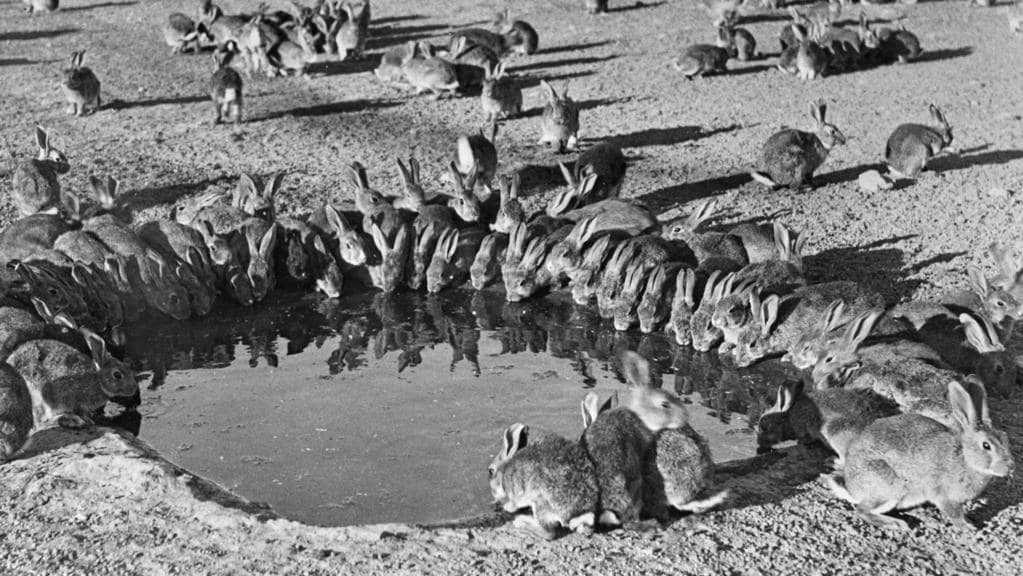
The idea of animal 🔉relocation for commercial 🔉breeding from one continent to another one was very popular in the middle of the 19th century. In 1859 the 🔉Englishman Thomas Austin I set 2 🔉dozens of wild 🔉rabbits free to make Australian 🔉fauna more 🔉diverse and to 🔉add 🔉targets for his 🔉hunting. Later he 🔉bragged about the fact that his lands I were full of 🔉gameI became visible could 🔉rarely see in Britain. Other 🔉farmers took 🔉encouragement from his example. The 🔉consequencesI became visible quite soon. Good climate, food 🔉abundance and the 🔉absence of 🔉predators 🔉formed 🔉favorable 🔉environment for the 🔉explosive 🔉growth of the rabbit 🔉population. 🔉By 1926 the number of rabbits amounted 🔉amounted to 20 million in Australia. One 🔉doe-rabbit can 🔉procreate 20-40 baby rabbits 🔉per year. 10 rabbits eat the same 🔉amount of 🔉grassI as one 🔉sheep does , but the sheep 🔉providesI 🔉3 times as much 🔉meat. Rabbits have 🔉delicious 🔉dietary meat and quite 🔉valuable 🔉furs or 🔉rabbit wool that was important for the first Australian 🔉settlers. But who could know that the rabbit 🔉plague 🔉named as the “Grey 🔉blanket” I was about to 🔉cover up Australia with such a 🔉speed?